
Fit · 8 min read
Climbing shoe fit and sizing: a practical guide
A climbing shoe should feel precise enough to place your foot confidently, but it should not require numb toes or damage to your skin. Fit is a relationship between a shoe's internal shape, your foot, the kind of climbing you do, and how long you expect to wear it. The right size is therefore the one that gives you reliable contact and usable comfort, not the smallest number you can tolerate for a few minutes.
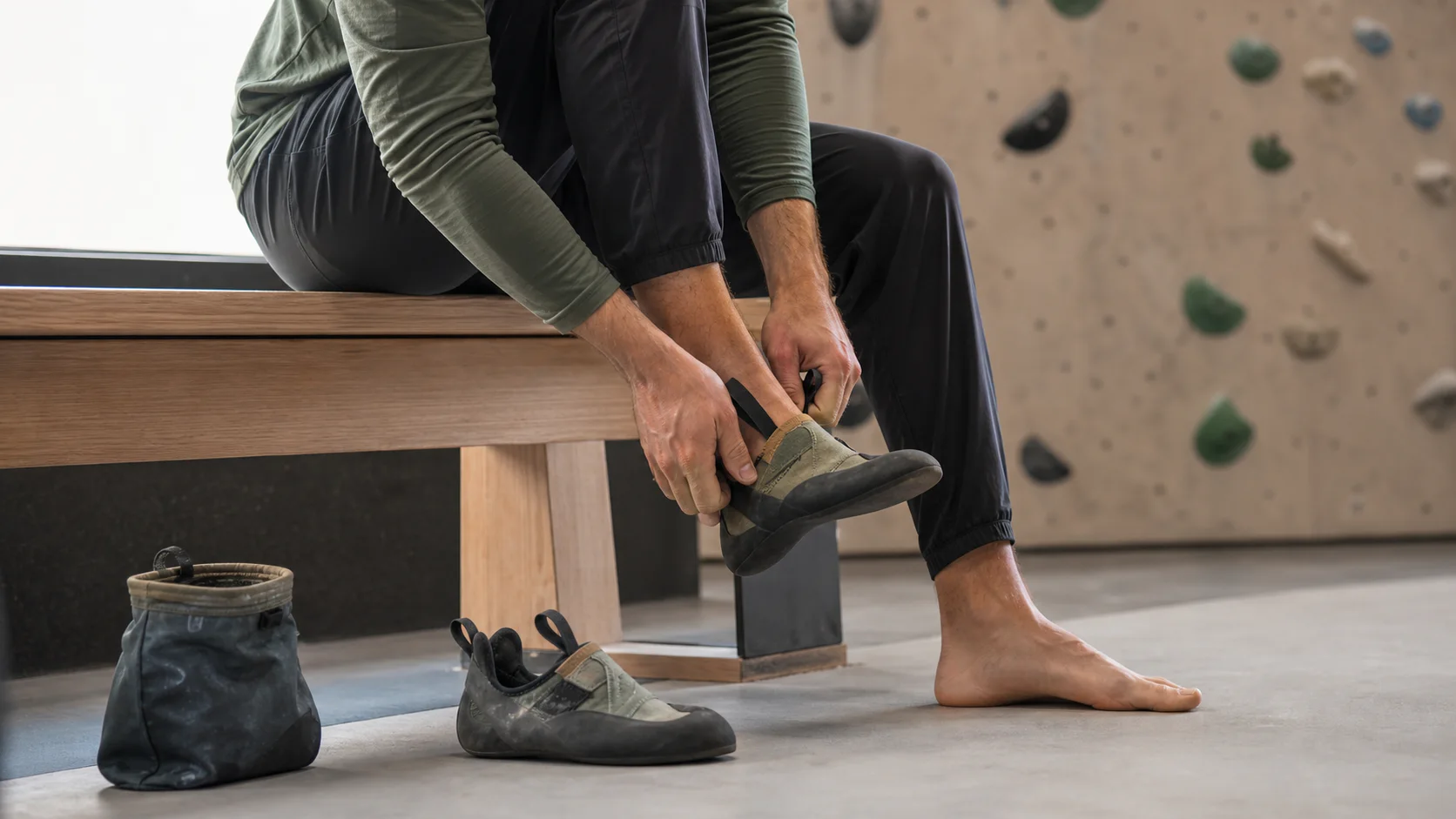
Start with shape, not the number on the box
Climbing-shoe sizes are not universal. Two models marked with the same EU size can have very different length, volume, heel width, and toe-box shapes. Begin by comparing the shoe's last to your foot: a low-volume shoe may suit a narrow heel and slim midfoot, while a higher-volume model can reduce pressure across a broad forefoot. Look for even contact along the toe box and a heel that stays seated when you pull gently against a hold.
Try shoes at the end of the day or after a short walk, when feet are normally a little larger. Wear the socks, if any, that you expect to climb in. Stand, flex your toes, and make a few controlled calf raises. A shoe can feel snug while standing and become uncomfortably compressed when your ankle bends, so check it in the positions you actually use on the wall.
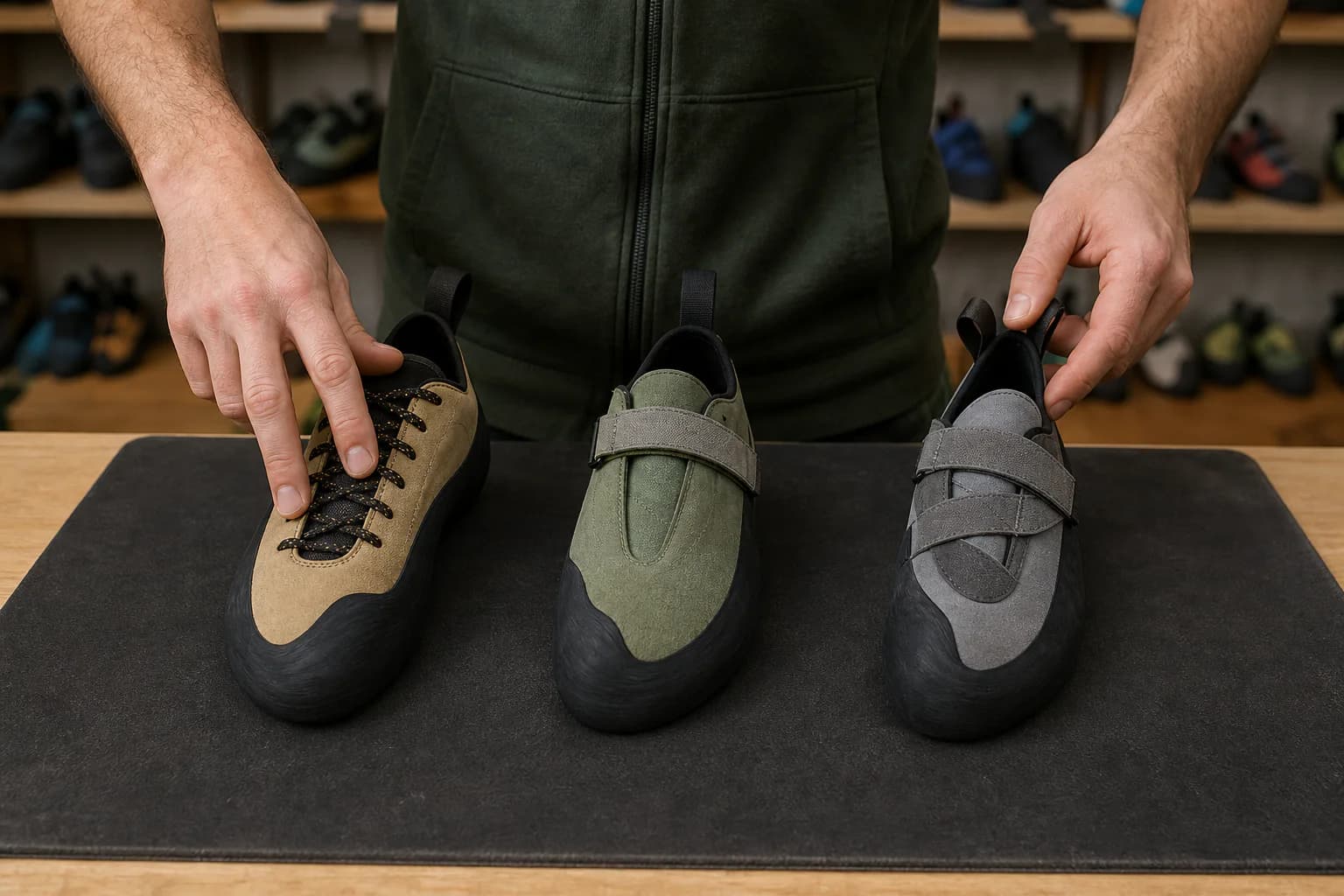
- Your longest toe should reach the end of the shoe without curling under hard pressure.
- The heel should not lift substantially when you pull on an edge or step high.
- Pressure should be distributed across the forefoot rather than concentrated on one toe.
How much downsize is reasonable?
Downsizing can make a shoe feel more secure, but it is not a requirement for performance. A neutral, comfortable shoe may be the better choice for long gym sessions, beginning climbers, or anyone whose foot shape does not suit an aggressively curved model. When testing a smaller size, separate normal snugness from warning signs: persistent tingling, sharp pressure at a joint, a heel that collapses, or skin damage are reasons to change the size or model.
Synthetic uppers generally change less than leather as they break in, while leather models may relax around the foot. Ask the retailer about the upper and closure before assuming a shoe will grow. If you buy online, record the retailer's return window and avoid wearing the shoes outside until you are confident about the fit. A discount is not useful if the final pair cannot be returned.
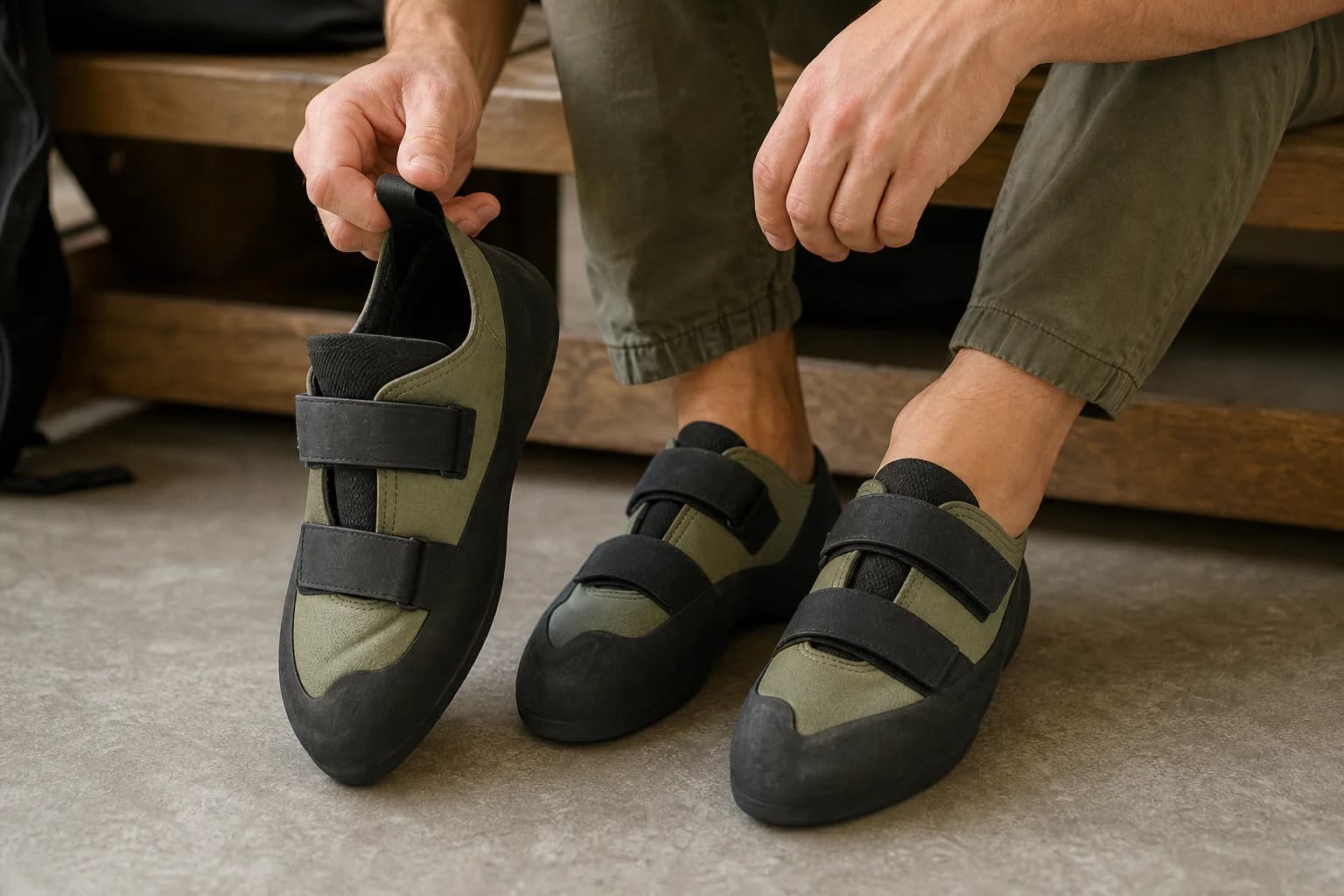
Use a repeatable fit check
Compare candidate shoes using the same checks: five minutes of ordinary standing, several controlled steps on a small edge, a toe-down position, and a heel hook motion. Remove the shoes between tests and note where pressure remains. This makes the decision less vulnerable to the excitement of a sale or to a salesperson's preferred sizing philosophy.
BaiBeta shows available sizes when a retailer provides them, but inventory and fit information can change. Treat the displayed size list as a snapshot, verify the retailer's size chart, and contact the retailer when a model's fit is ambiguous. The retailer controls the final product description, stock, shipping, and return terms.
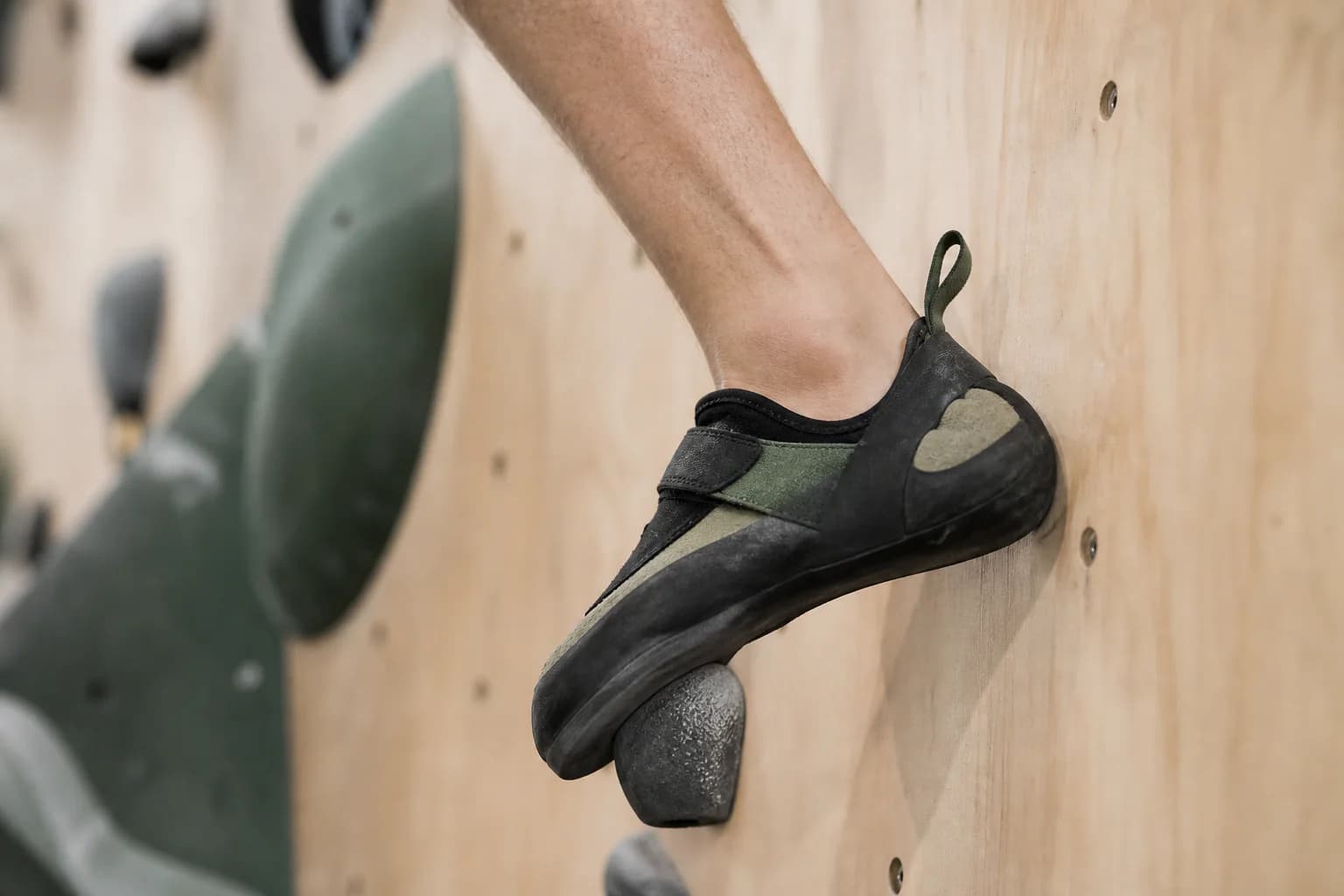
Account for foot shape and closure
A foot that is narrow at the heel but wide across the forefoot may need a different compromise than a foot with uniform volume. Pay attention to where the upper wrinkles and where it pulls when you flex. A lace can distribute pressure over a longer area, while a single strap or slipper can feel more immediate but offer less fine adjustment. The closure should hold the shoe in place without becoming a substitute for the correct last.
Different feet can also prefer different levels of asymmetry. If one foot is longer or has a prominent joint, size for the foot that needs more room and use the closure to stabilize the other. Do not assume that a painful spot will disappear because the shoe is new. Break-in can soften a material, but it should not be relied on to solve a structural mismatch.
When buying online, measure both feet on paper and keep the measurement with the retailer's chart. Record the model, size, upper material, and the reason you kept or returned it. That small record turns the next online order into a comparison rather than another guess. It is especially useful when a retailer changes a model's name or releases a new generation.
A practical checkout checklist
Before checkout, confirm the model and version, the size system, the retailer's return deadline, and whether the pair is final sale. Recheck the live size selector rather than trusting a search-result snippet. If you cannot answer one of those questions, save the shoe and gather the missing information instead of treating the discount as a deadline.
- Photograph or save the retailer's size chart and return terms for the order date.
- Try the shoes indoors and inspect both feet before removing tags or packaging.
- Contact the retailer when the listed fit, size conversion, or stock message is unclear.