
Fit · 7 min read
Beginner versus performance climbing shoes
The phrase performance shoe is often used as if it means better. In practice, performance is specific to a task: a comfortable neutral shoe can outperform an aggressive shoe on a long vertical route if it lets you stand on small edges without distracting pain. Beginners benefit from learning what each shape does, then choosing a model that supports their next season of climbing rather than buying the most dramatic downturn available.
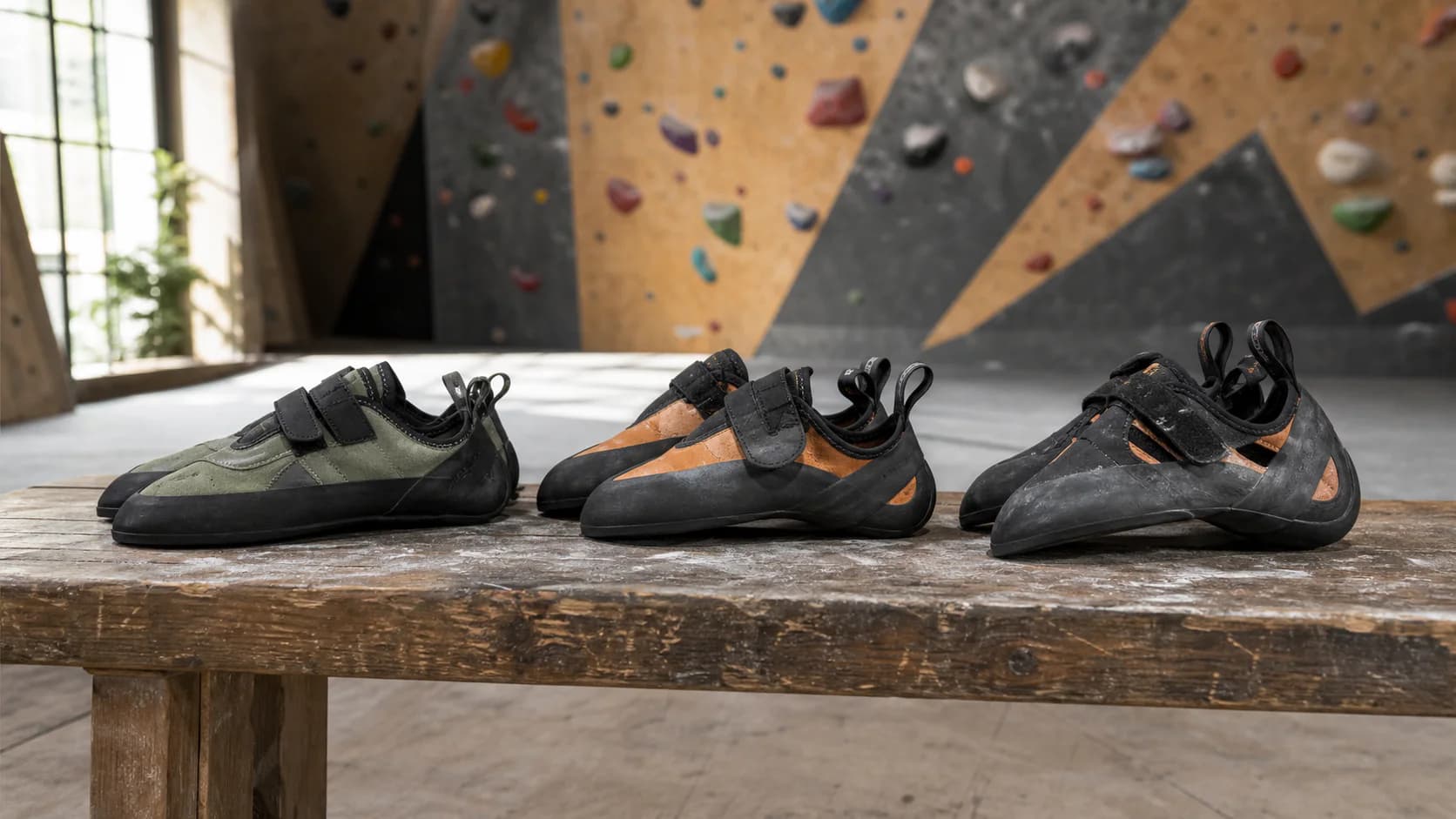
Neutral shoes build useful habits
Neutral shoes keep the foot in a relatively relaxed position and are often easier to wear for a full session. They are useful for learning deliberate foot placement, warming up, crack climbing, and routes where endurance matters. A firm neutral shoe can still edge well; it simply does not force your toes into the same posture as a strongly downturned model.
For a first pair, prioritize a secure heel, a closure you can adjust, and a shape that does not create sharp pressure. Velcro is convenient for quick removal, while laces allow more gradual volume adjustment. Neither closure is automatically more advanced. The important question is whether you can keep the shoe stable without overtightening it.
Moderate and aggressive shoes are tools
Moderate downturn and asymmetry can help on steeper terrain, pockets, and small edges, but the benefit depends on technique and fit. A shoe that is too soft may fold on a tiny edge; a shoe that is too stiff may make smearing feel less natural. Aggressive shoes are often most useful as a second pair for a particular style, not as a universal replacement for a comfortable trainer.
Try a performance shoe on the terrain you expect to climb. Test the toe on an edge, press the rubber onto a volume, and make a controlled heel hook. If the shoe only feels effective when painfully tight, move to another model or size. Skill, rubber condition, and route reading influence outcomes at least as much as the silhouette.
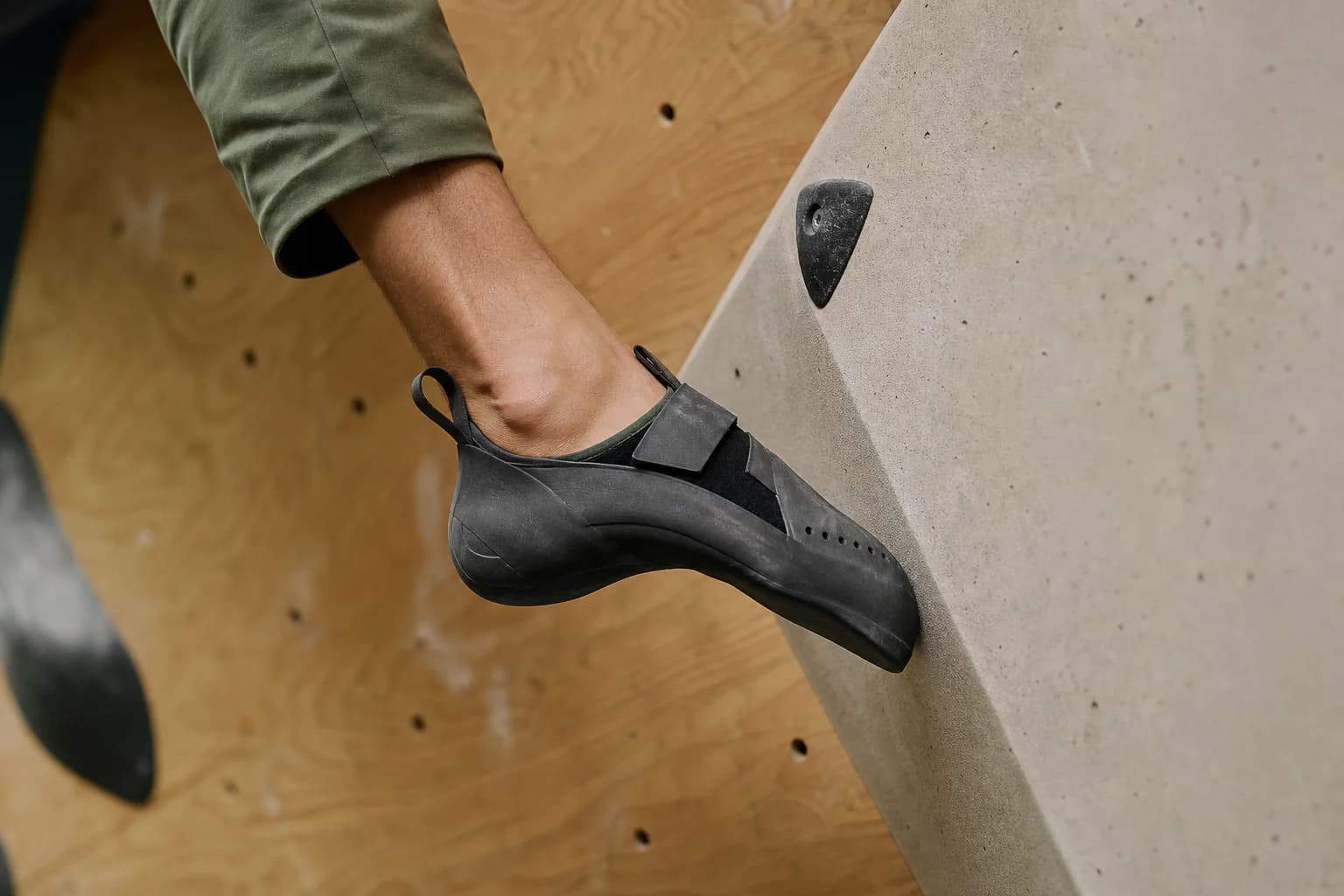
- Choose neutral for comfort, learning, long sessions, and mixed terrain.
- Choose moderate for a balance of edging, smearing, and support.
- Choose aggressive when a specific steep or technical style justifies the trade-off.
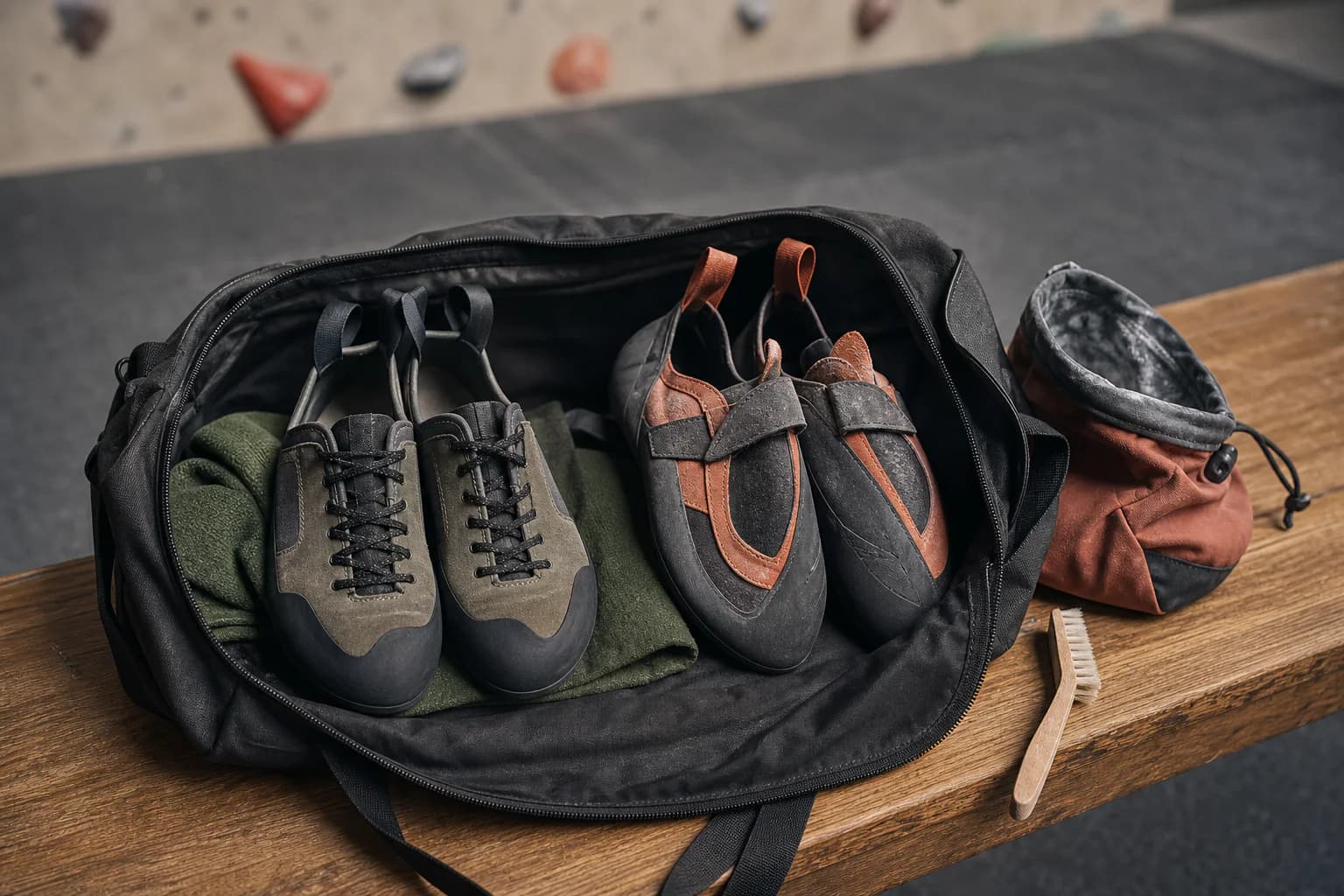
A two-shoe rotation can be more useful than one extreme pair
Many climbers eventually rotate a comfortable shoe and a more precise shoe. The comfortable pair handles warmups, volume-heavy training, and long routes. The precise pair comes out for a short bouldering session or a route where its shape solves a known problem. This extends the useful life of both pairs and makes fit decisions more deliberate.
When comparing prices on BaiBeta, compare like with like: model, closure, colourway, currency, and whether the listed price is actually a markdown. A lower displayed price can be offset by shipping, final-sale rules, or unavailable sizes. Open the retailer offer before purchase and verify those details.
Let your climbing style guide the upgrade
The best time to consider a performance shoe is when you can name the problem it should solve. Perhaps your comfortable shoe folds on a small edge, your heel moves on a steep boulder, or your current pair becomes painful before a long route ends. Naming the problem gives you a test: the new shoe should improve that movement without creating a larger cost in comfort or versatility.
Beginners often improve quickly simply by placing the foot more intentionally. A supportive shoe can make that learning easier, but it cannot replace looking at the hold, weighting the big toe, and keeping the hips balanced. If a new model makes you climb more carefully because it is less forgiving, that may be a useful training effect; it is not proof that the model is universally better.
Review your choice after several sessions rather than after the first impression. Note which routes felt easier, when you removed the shoes, and whether the rubber is wearing evenly. This observation is more valuable than a generic label such as beginner or performance and gives you evidence for the next purchase.
Questions to ask in the shop
A good fitting conversation includes your normal session length, the terrain you climb, whether you prefer socks, and any pressure points that have caused trouble. Ask to compare two shapes in the same nominal size and describe what you feel rather than asking only whether the shoe is supposed to be tight. The goal is a stable, precise connection that you can repeat across a session.
If you are buying a second pair, bring the first pair or write down what you would change. More downturn, less volume, a firmer toe, or a different closure are useful comparisons; the vague goal of a more advanced shoe is not. A shop can then help you test one change at a time and explain which compromise comes with it.
Finally, ask how the shoe is expected to change with use and what signs mean it is too small. A responsible answer leaves room for your own comfort and return rights. You should leave knowing what to test at home, not feeling pressured to accept pain as evidence of commitment.